The Democratic Republic of Congo (DR Congo) is once again at the heart of a growing humanitarian emergency. Ongoing violence, political instability, and armed group activity—particularly in the eastern provinces—have triggered a sharp rise in displacement, creating a new refugee crisis both within and beyond the country’s borders.
As conflict intensifies, hundreds of thousands of people are being forced from their homes, fleeing with little to no belongings. Many are seeking refuge in overcrowded camps or informal settlements, while others cross into neighboring countries such as Uganda, Rwanda, and South Sudan. With limited resources and infrastructure, these host communities are struggling to cope with the increasing pressure.
A Crisis Driven by Violence
In the past year, renewed fighting between government forces and armed rebel groups—especially the M23 movement in the eastern region—has led to the collapse of fragile peace efforts. In provinces like North Kivu, South Kivu, and Ituri, towns have become battlegrounds, villages have been burned, and civilians have been caught in the crossfire.
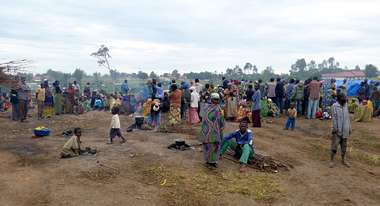
Entire families are fleeing overnight to escape violence, often walking long distances through dangerous terrain. Most arrive at displacement sites traumatized, hungry, and exhausted. According to the United Nations, over 6.9 million people are now internally displaced within DR Congo, and thousands more have become refugees in neighboring states.
The situation has become so severe that some areas report a lack of basic shelter, food, and sanitation, with displaced populations living under plastic sheets or open skies, exposed to disease and insecurity.
Humanitarian Needs on the Rise
With such massive displacement, the humanitarian needs are overwhelming. Access to clean water, adequate food, and healthcare is extremely limited, especially in remote or newly established camps. Malnutrition is rapidly increasing among children, and outbreaks of cholera and other preventable diseases have been reported.
In addition to physical needs, protection is a major concern. Refugees—especially women and children—face heightened risks of gender-based violence, human trafficking, and exploitation. The lack of legal protection for many refugees adds another layer of vulnerability.
Humanitarian organizations are working around the clock, but the scale of the crisis and the lack of funding are major barriers. Relief efforts remain severely under-resourced, and safe access to many areas is restricted due to insecurity.
ADIYUVA’s Commitment and Response
ADIYUVA is actively engaged in addressing this escalating crisis. Our teams are working on the ground in both conflict-affected provinces and refugee-hosting regions to provide immediate relief and long-term support.
Our response focuses on:
- Emergency food distribution to displaced families in camps and remote communities
- Water, sanitation, and hygiene (WASH) services to reduce the spread of disease
- Shelter support, including tents, tarps, and construction materials
- Protection programs for women, children, and survivors of violence
- Psychosocial support and trauma care for those affected by conflict
Through local partnerships and community engagement, ADIYUVA also works to restore livelihoods and rebuild agricultural systems once communities begin to stabilize.
A Global Call for Solidarity
This crisis cannot be ignored. As displacement continues to rise, so does the urgency for international action. Governments, donors, and humanitarian agencies must come together to increase funding, expand access, and provide long-term support for refugees and host communities alike.
The people of DR Congo need more than just short-term relief—they need safety, stability, and hope for a future beyond crisis.
The international community must not look away,” says an ADIYUVA spokesperson. “These families have lost everything. Now is the time to stand with them and support their right to live in safety and dignity