

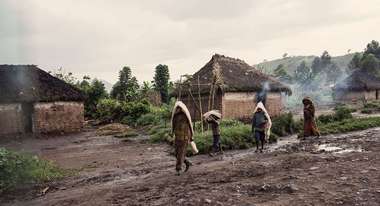
The Democratic Republic of Congo (DR Congo) is once again in the grip of a deepening humanitarian crisis. An alarming escalation of violence in the eastern provinces has triggered widespread displacement and a growing hunger emergency, affecting millions of civilians who are already vulnerable from years of conflict and poverty.
A Region Caught in Conflict
Eastern DR Congo, particularly North Kivu, South Kivu, and Ituri provinces, has long suffered from chronic instability. Dozens of armed groups operate in the region, competing for control over resources, territory, and political influence. The resurgence of militant activity in early 2025 has resulted in deadly clashes, mass killings, and forced displacements.
Towns and villages are being emptied as families flee for safety, often with little more than the clothes on their backs. According to the United Nations, over 6.9 million people are currently displaced within DR Congo, the highest number in the country’s history. Thousands more are crossing into neighboring countries in search of shelter.
A Hunger Emergency Unfolding
As violence drives people from their homes and farms, food production and distribution have been severely disrupted. Local markets have collapsed, roads are blocked, and humanitarian access is restricted due to ongoing fighting. Many internally displaced persons (IDPs) are living in overcrowded camps or makeshift shelters, with little or no access to clean water, healthcare, or basic sanitation.
Food insecurity is growing at an alarming rate. It is estimated that more than 26 million people in DR Congo are facing crisis or emergency levels of hunger, including children, pregnant women, and the elderly. Malnutrition is rising sharply, particularly in displacement camps where food aid is insufficient or absent.
In some regions, the situation has reached famine-like conditions. Without urgent intervention, the humanitarian toll could increase dramatically in the coming months.
The Human Toll
The human cost of this crisis is heartbreaking. Families have been torn apart, children are out of school, and communities have lost their livelihoods. Many of the displaced have been forced to move multiple times, each time losing more of what little they had left.
Women and girls are especially vulnerable, facing increased risks of violence, exploitation, and abuse. Access to maternal healthcare and protection services is minimal in displacement camps, further endangering lives.
ADIYUVA’s Response
In the face of this growing emergency, ADIYUVA is actively responding with life-saving support for affected communities. Our teams are working on the ground in accessible areas to provide:
- Emergency food aid to displaced families and vulnerable households
- Clean water and hygiene supplies to prevent the spread of disease
- Temporary shelter materials for those living in unsafe or exposed conditions
- Support for women and children, including protection and psychosocial care
- Long-term recovery efforts, such as agricultural support and income-generating programs where possible
Recently, ADIYUVA allocated €150,000 in emergency aid to help displaced people around Goma, where tens of thousands are living in the open without food or water following renewed clashes.
A Call for Urgent Action
The situation in DR Congo requires immediate and sustained international attention. Humanitarian agencies must be granted safe and unhindered access to affected areas. More funding is urgently needed to expand food distribution, health services, and protection programs.
At the same time, pressure must be placed on all parties to the conflict to end the violence and allow civilians to return home safely. Peace-building, dialogue, and justice must accompany relief efforts if long-term stability is to be achieved.
“We cannot let this crisis be ignored,” says an ADIYUVA spokesperson. “Millions of people are suffering, and every delay costs lives.”